
1979 and the Women’s Rights Movement
The 1970s marked a decade of growing advocation for women’s rights, starting with the initiation of the Equal Rights Amendment. Created in 1923, the ERA was initially rejected and ignored for more than 50 years before it was brought before Congress once again. The bill pushed for equality between men and women, stating that “equality of rights under the law shall not be denied or abridged by the United States or by any State on account of sex.”
The key factor that finally got the amendment on the house floor was the creation of the National Organization for Women in 1966, which endorsed the bill. Additionally, the decade was an emergence of second-wave feminists who had the means to publish articles and papers that supported the equal rights movement. In an article printed in TIME, female authors such as Kate Millett wrote how women “want equal pay for equal work, and a chance at jobs traditionally reserved for men only. They seek nationwide abortion reform — ideally, free abortions on demand. They desire round-the-clock, state-supported child-care centers in order to cut the apron strings that confine mothers to unpaid domestic servitude at home”. Gloria Steinem likewise published an essay in TIME titled “After Black Power, Women’s Liberation“, which drew national attention to the issue. In 1970 she wrote of how “in Women’s Lib Utopia, there will be free access to good jobs — and decent pay for the bad ones women have been performing all along, including housework. Increased skilled labor might lead to a four-hour workday, and higher wages would encourage further mechanization of repetitive jobs now kept alive by cheap labor. … Schools and universities will help to break down traditional sex roles, even when parents will not. Half the teachers will be men, a rarity now at preschool and elementary levels; girls will not necessarily serve cookies or boys hoist up the flag.”
In 1972 the amendment was passed in both houses of Congress and the states were given a deadline of March 1979, the year 9 to 5 takes place in, to get a 3/4 majority for ratification. By the time the deadline was reached, the amendment was only three states shy of being passed. Some attribute this lack of support to Phyllis Schlafly, who advocated that women should keep their place in the house and enjoy the benefits of that protected status. A National Women’s Conference was held in 1977, attempting to counteract the effect of Schlafly’s words, however the progress made by the more than 14,000 women who attended was not enough to get any further states ratified. After the expiration of the deadline, the bill has only been renewed for discussion a handful of times in the past 40 years.
Among the laws supporting women’s rights that were passed prior to 1979 were the Equal Pay Act of 1963, which banned sex discrimination in wages in a number of professions (it would later be amended in the early 1970s to include the professions that it initially excluded), and the Civil Rights Act of 1964, which banned workplace discrimination not only on the basis of race, religion, and national origin, but also on the basis of sex. In 1978 the Pregnancy Discrimination Act was passed as an amendment to Title VII of the Civil Rights Act of 1964.
- Other Notable Events:
- January 9th: Music Festival Charity run for UNICEF, fighting world hunger
- Among those attending, John Denver, ABBA, Olivia Newton John
- February 7th: Iranian Revolution, supporters of Ayatollah Khomeini take over the Iranian military
- June 1st: McDonald’s introduces the Happy Meal
- November 1st: Military Coup in Bolivia
- January 9th: Music Festival Charity run for UNICEF, fighting world hunger
- Additional Reading: https://www.cnn.com/2015/07/22/living/the-seventies-feminism-womens-lib/index.html
Women in the Office
In the 1970s, the role of women had only slightly widened beyond the stereotypical expectation of the 50s and 60s, that a women’s job was to become a wife and take care of the house. Women who found jobs were often only doing so to pay the bills until they could get married. Very frequently they were left doing the more menial positions, clerical work, manning phones, working typewriters. The highest position women could achieve was typically a head secretary or teacher, while men could travel as high as becoming a CEO. It was highly infrequent to see either gender swapping this status, a male secretary or a female in upper management. So large was the gap in power between the two sexes that “sexual harassment in the workplace” was a term that didn’t even exist prior to the mid 1970s.
In terms of paying the bills, working in an office setting didn’t always do just that. Towards the end of the 1970s, the average American was making $11,500 a year. Women were paid less across the board, largely because they would take work for less pay and companies wanted to lower their costs. It was also largely believed that men were working to support a family, while women were working only to support themselves. Thus, they did not need to be paid as much. This line of thinking increased the wage gap drastically. It was not readily believed that women could make a successful career without the aid of a man. Marion Wood, a conditional supporter of the Women’s Rights Movement, was quoted as stating that “for a woman to succeed, there must be a man in her life who believed it’s the right thing to do.”
The women’s movement of the ’70s was in part a reaction against the type of happy homemaker that was often portrayed in television sitcoms of previous decades. Unlike the more housewifely and stereotypical figures in Leave it to Beaver, or The Donna Reed Show, in the 1970s shows appeared such as Julia—where Diahann Carroll starred in the first non-stereotypical network TV role for an African-American woman as Julia Baker, a single mom who worked full time as a nurse—and The Mary Tyler Moore Show in which Moore portrayed Mary Richards, a career-oriented single woman who is a news producer for a TV station in Minneapolis. These were early suggestions that women could have a strong, independent role in the workplace. While it was not readily accepted, eventually women started to become a regular site in the office place. By the late 1970s, some women were even offered positions in management, though the occasion was rare.
Sexual harassment was a common occasion in the workforce. In the mid 1970s, a campaign began to challenge the justice system and culture that failed to recognize women’s consent.
The phrase “sexual harassment” itself was coined in 1975, by a group of women at Cornell University. According to an article by TIME, Carmita Wood, a former employee of the university, “filed a claim for unemployment benefits after she resigned from her job due to unwanted touching from her supervisor. Cornell had refused Wood’s request for a transfer, and denied her the benefits on the grounds that she quit for ‘personal reasons.’ Wood together with activists at the university’s Human Affairs Office, formed a group called Working Women United. At a Speak Out event hosted by the group, secretaries, mailroom clerks, filmmakers, factory workers and waitresses shared their stories, revealing that the problem extended beyond the university setting. The women spoke of masturbatory displays, threats and pressure to trade sexual favors for promotions.” A 1976 survey by Redbook showed that 80% of respondents had encountered sexual harassment on the job.
TIME further noted that “as many as 18 million American females were harassed sexually while at work in 1979 and 1980.” The magazine also reported that our old friend and “antifeminist crusader” Phyllis Schlafly believed these women were “asking for it.” At a Senate committee called to review federal guidelines on harassment, Schlafly testified that “virtuous women are seldom accosted.” Because of statements like hers, regardless of the fact that by 1977 three different Supreme Court cases confirmed that a woman could legally sue her employer for harassment, very few women spoke up about their abuse. Sexual harassment from male employers was considered trivial and harmless, often dismissed the moment it was mentioned.
Additional Reading: https://www.workforce.com/news/the-womens-movement-in-the-70s-today-youve-come-a-long-way-but
https://time.com/4286575/sexual-harassment-before-anita-hill/
The Original 9 to 5 and Dolly Parton
9 to 5 was originally a film created primarily by co-star Jane Fonda, though the fame and success of Dolly Parton’s role in the film, as well as her hit song of the same name, prompted her to be the primary instrument in getting the film made into a musical nearly thirty years later. Jane Fonda came up with the idea for the plot of the film based on stories she had heard and experienced from various women in the office place of her early career. Originally the film was meant to be a drama, but early on the production team determined that the message in that format would have been “too preachy” and would likely alienate viewers as opposed to influence them. The story was written keeping in mind the extensive research that Fonda did, interviewing secretaries and office workers with the goal of determining and expressing how they really feel working in a world of men.
The movie grossed over 109.3 million dollars, making it among the top 20 highest grossing comedies of all time. It eventually was adapted into a television show, and finally the Broadway musical, in which Parton’s role in production was more substantial. She wrote many of the new songs the musical includes, as well as adding herself as a narrator-like character. The musical closely follows the plot of the movie, with only minor changes such as the name of the company and the location that Hart is sent to in the end of the production. It was nominated for four Tonys including Best Original Score for Dolly Parton.
Dolly Parton was born in 1946 and grew to become a famous and successful country singer, among other various achievements. In 1967 she released her debut album, Hello, I’m Dolly. By the 1970s she reached her sales and chart peaks and in 2000 she had her own label, Dolly Records. Parton’s music includes 25 Recording Industry Association of America (RIAA)-certified gold, platinum and multi-platinum awards. She has had 25 songs reach No. 1 on the Billboard country music charts, 41 career top-10 country albums, a record for any artist, and she has 110 career charted singles over the past 40 years. She has garnered nine Grammy Awards, two Academy Award nominations, ten Country Music Association Awards, seven Academy of Country Music Awards, three American Music Awards, and is one of only seven female artists to win the Country Music Association’s Entertainer of the Year Award. Parton has received 47 Grammy nominations.
By her own description, Parton grew up “dirt poor” in a cabin in the mountains of Tennessee. Both music and religion were an early part of her life, her grandfather being a local pastor and her mother an avid music lover. One of twelve children, Parton was known to perform as early as age six. In 1964 she moved to Nashville, having already received local acclaim for her excellent singing and song-writing ability. She was quickly hired by a publishing company and wrote chart winning songs for other performers such as Skeeter Davis and Bill Phillips. After singing harmony for several of the best-selling numbers, her company allowed her to record her own album. She was soon invited by Porter Wagoner to be a part of his television show, and eventually recorded several albums in duet with him. Her solo career took off after that, with songs such as “Jolene” gaining enough success to top the country chart. In 1976 she earned her own television show Dolly! featuring two of her own siblings who eventually gained their own recording contracts. Eventually, she starred in the 1980 film 9 to 5. Her early experience with poverty and the attempt to make a career for herself as a woman in a male-dominated field likely influenced her drive to style the Broadway production towards reaching other women who felt powerless in the workplace.
Equipment and Technology
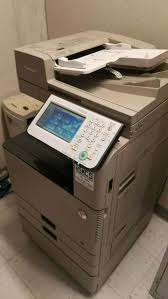
A number of office machinery are mentioned in the script that are less likely to be used today, and likewise are less likely to exist outside an office setting. Because of this fact, this section is included to describe what these machines look like and how they function for those among the cast who don’t have experience operating them.
- Xerox Machine: More modernly known as a photocopier, this machine scans and copies images, printing them cheaply onto paper. Xerox is short for xerography, but is more commonly called a Xerox machine due to the Xerox company being the brand name of the first and most popular model. To use one, a worker would place the paper they wish to scan face down onto the glass and lower the cover. They would then go through the menu and indicate their desire to copy the document. Pressing this button, the machine would function as a printer, releasing the amount of printed copies as specified by the user. Some models of this machine allow for more varied options, copying in color as opposed to black and white, permitting larger numbers of copying, printing on the front and the back of the sheet. The version of Xerox machine used in the show would have been one of the more simple versions, not able to accommodate dual-sided printing. There would likely have only been one or two in the office, as the price of photocopying machines was very high until the mid 1980s and companies typically could not afford to use them excessively.
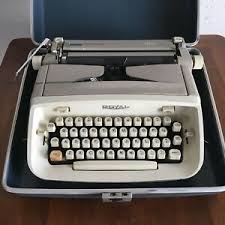
- Typewriter: Comparable to a modern day laptop, typewriters had backspaces, shift, a space bar, and a “carriage return” key which functions similar to an enter key. The layout of keys changed greatly from the invention of the typewriter to its eventual layout in the final decade of its regular use, the 1970s. The “QWERTY” layout was the one that would have been used during the timing of the show, meaning that the way one would type today would match what is needed to be historically accurate for 9 to 5. When one wished to move to the next line, they would press the carriage return key and the typewriter would literally shift the paper back to the right so that the key would be positioned correctly over it. If one wanted to overtype something, such as adding an ‘ over an e, they would use a “dead key”, which would do the opposite of a space bar, keeping the cursor where it was as opposed to advancing forward on the page. If a person made a mistake they would have to either start over or use white out to cover the mistaken letter, wait for it to dry, and then re-type over it. In the late 1970s, there was the addition of the “self correcting tape”, which covered mistaken letters more swiftly allowing for less lost time.
- Adding Machine: This is a very early form of a calculator that had spinning wheels which would tabulate addition and multiplication. The following is a description of how it is operated.
“To add a new list of numbers and arrive at a total, the user was first required to “ZERO” the machine. Then, to add sets of numbers, the user was required to press numbered keys on a keyboard, which would remain depressed (rather than immediately rebound like the keys of a computer keyboard or typewriter or the buttons of a typical modern machine). The user would then pull the crank, which caused the numbers to be shown on the rotary wheels, and the keys to be released (i.e. to pop back up) in preparation for the next input. To add, for example, the amounts of 30.72 and 4.49 (which, in adding machine terms, on a decimal adding machine is 3,072 plus 449 “decimal units”), the following process took place: Press the 3 key in the column fourth from the right (multiples of one thousand), the 7 key in the column 2nd from right (multiples of ten) and the 2 key in the rightmost column (multiples of 1). Pull the crank. The rotary wheels now showed 3072. Press the 4 key in the 3rd column from the right, the 4 key in the 2nd column from right, and the 9 key in the rightmost column. Pull the crank. The rotary wheels now show a running ‘total’ of 3521 which, when interpreted using the decimal currency colour-coding of the key columns, equates to 35.21. Keyboards typically did not have or need 0 (zero) keys; one simply did not press any key in the column containing a zero. Trailing zeros (those to the right of a number), were there by default because when a machine was zeroed, all numbers visible on the rotary wheels were reset to zero.”
Subtraction was impossible, except by adding the complement of a number (for instance, subtract 2.50 by adding 9,997.50).
Multiplication was a simple process of keying in the numbers one or more columns to the left and repeating the “addition” process. For example, to multiply 34.72 by 102, key in 3472, pull crank, repeat once more. Wheels show 6944. Key in 3472(00), pull crank. Wheels now show 354144, or 3,541.44
In the 1980s, the adding machine was replaced with the common calculator, and quickly became obsolete.

Consolidated Industries?

There in fact is a company called Consolidated Industries and it was founded in 1948. Though it was created with more than enough time to fit into the timeline in which 9 to 5 takes place, there is no evidence to suggest that the company in the show is tied to the corporation with the same name. Given the small size of Consolidated Industries in real life, it is not likely the two would necessarily be connected. However, assuming there is a relation, here is some information on the real Consolidated Industries.
They specialize in producing “high quality forgings from ferrous, non-ferrous, and exotic metals.” To put in simpler terms, the company’s function is to forge metal into tools that can be supplied to other companies focusing on furthering technological advancement. Some examples are fixed-wing aircraft, helicopters, jet engines, military hardware, power generation, and centrifuges. Consolidated Industries is known for producing forgings that range in size from 1 to 200 pounds in low or high volumes.
In the company’s administrative end, at least in modern day, they are known for utilizing “Lean Manufacturing”, which is a style of management intended to cut down on wasted time and resources. This can be done by reducing down the number of employees in a company, optimizing manufacturing times and processes, and eliminating any unnecessary costs. With this style of management in mind, it is understandable why the company in the show would be less inclined to provide daycare services, and would be rather hasty to let go of unproductive employees. While founded on principles intended to create efficient and harmonious work, unchecked lean management could feasibly morph into a less caring, more ruthless form of handling employees due to its emphasis on cutting costs. Despite this risk, Lean Manufacturing is one of the most popular styles of management to this day because it is known for producing excellent results, often with no negative impact on its employees.
Company Website: http://www.consolindustries.com/about-consolidated-industries-company.php
More Information
This blog is the location for any and all research needed for the production, and will expand and shift as the show requires. As the blog is still growing, any questions you have I would be more than happy to look into and supply further information on here.

